Healthcare Platform for Medication Management and Health Programs
Transforming a prescription delivery service into a scalable patient centric platform
ROLE
Principal Product Designer / Acting Head of Product
TIMELINE
12 months
PLATFORM
Mobile (React Native) · Web
TEAM
CEO, Head of Operations, Marketing Lead, Engineering Lead, 4 Developers, Customer Support, 1 Designer (design system support)
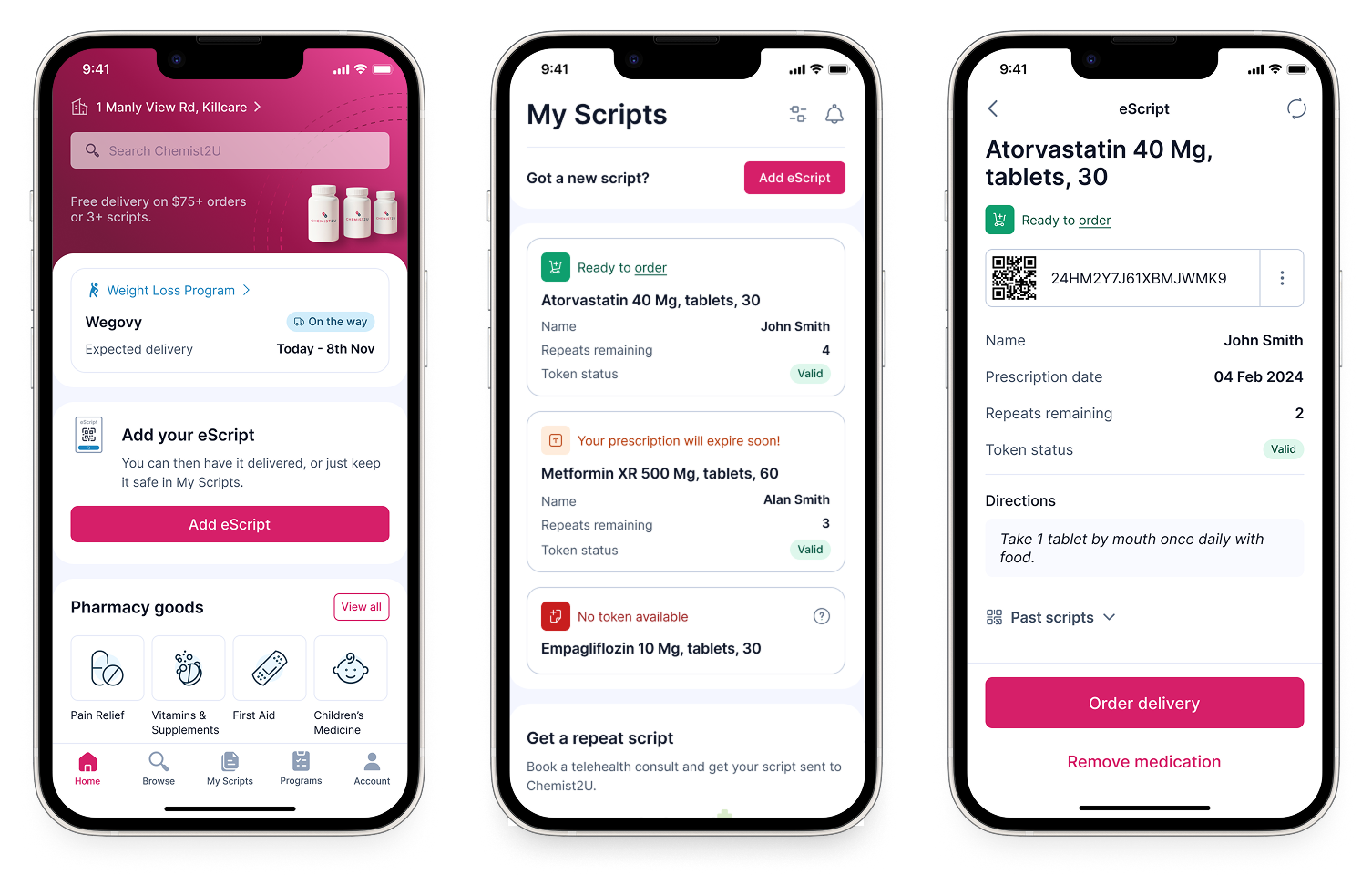
Scripts uploaded in first month
of patients logging progress weekly
drop in support tickets
to launch new programs (vs 3 months)
Patients Never Saw Their Scripts Again
I inherited a linear stepper flow where users uploaded a script, it went straight to delivery, and that was it.
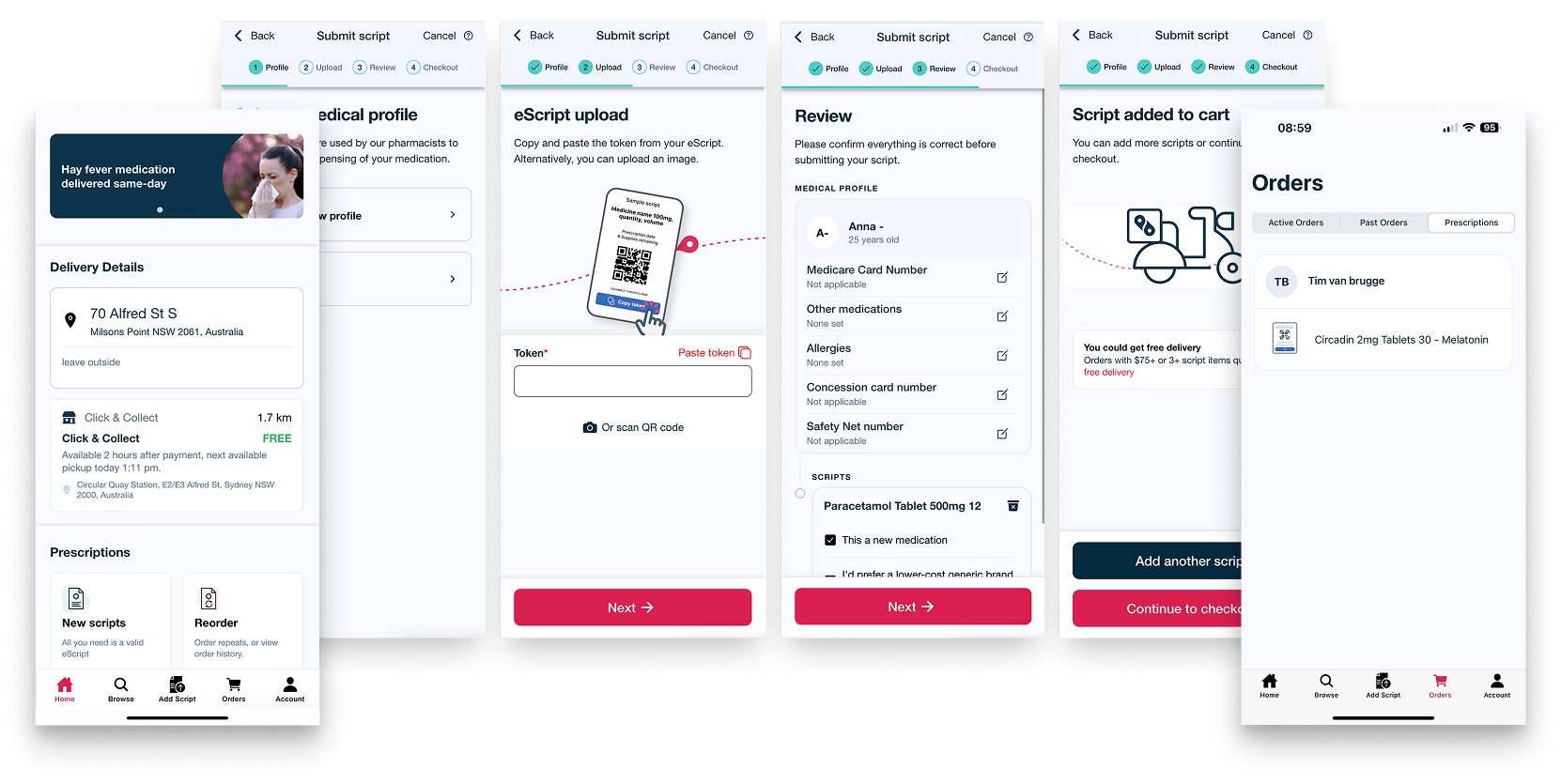
Patients could order medication but had no way to track it. They could sign up for a program but had no way to manage it. Script confusion was the #1 support complaint across 301 customer responses.
The business had ambitions to scale health programs, but every new one had to be hardcoded from scratch. One program took 3 months to launch. That model couldn't scale.
Three Separate Problems Were Actually One System
Medication management, health programs and delivery coordination weren't separate features. They were three parts of one connected patient experience.
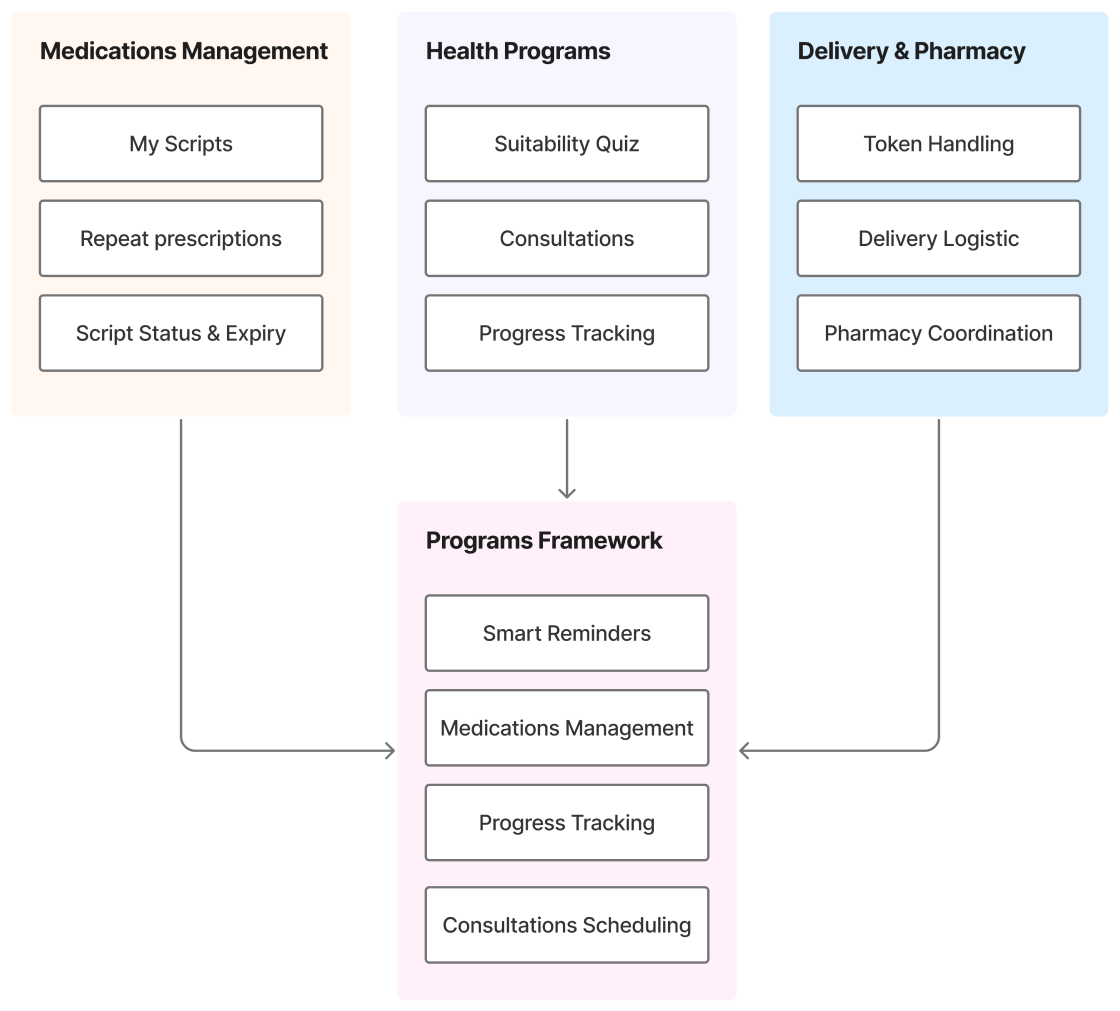
A prescription with pharmacy consent is just a health program without consultations.
My Scripts Became the Central Medication Wallet
Leadership wanted to jump straight to programs, but I pushed back using support ticket volume. Script confusion was the top complaint, and without the foundation nothing else would work.
My Scripts MVP launched in 2 weeks. Before building I tested a dedicated page versus a tab inside Profile. The tab failed on discoverability so the dedicated page won.
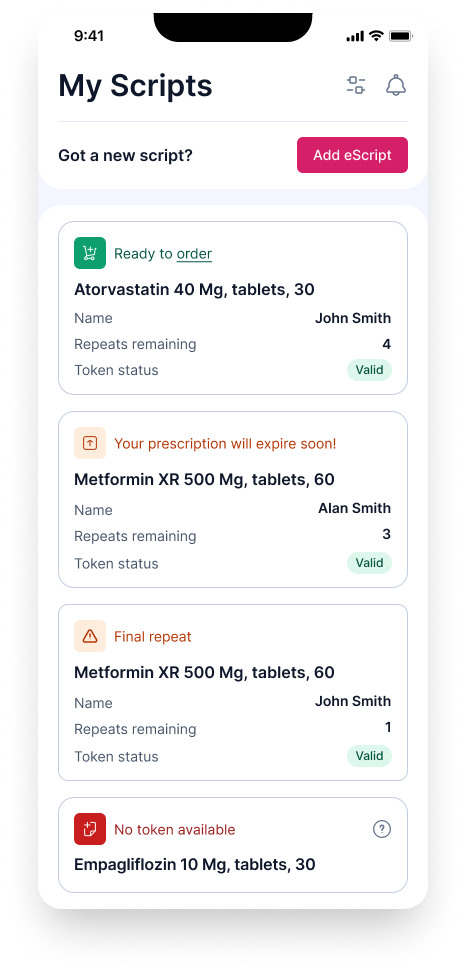
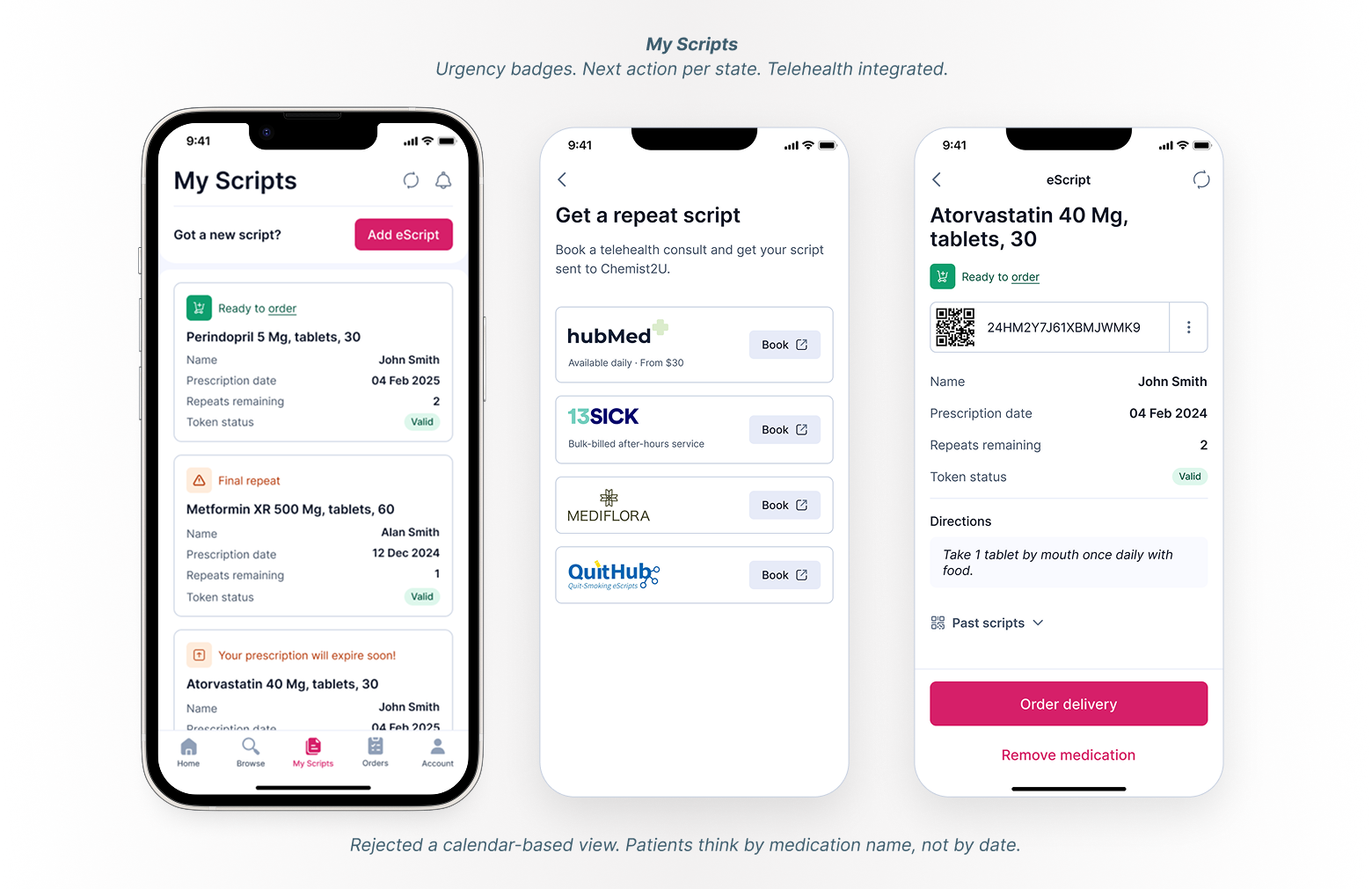
From Basic List to Intelligent Medication Wallet
My Scripts MVP gave patients a place to see their scripts. The final version told them what to do next.
- Urgency badges with a clear next action per state
- Telehealth booking integrated into the script view
- Prescription data pulled automatically from eRX
A Framework Built to Launch Any Program
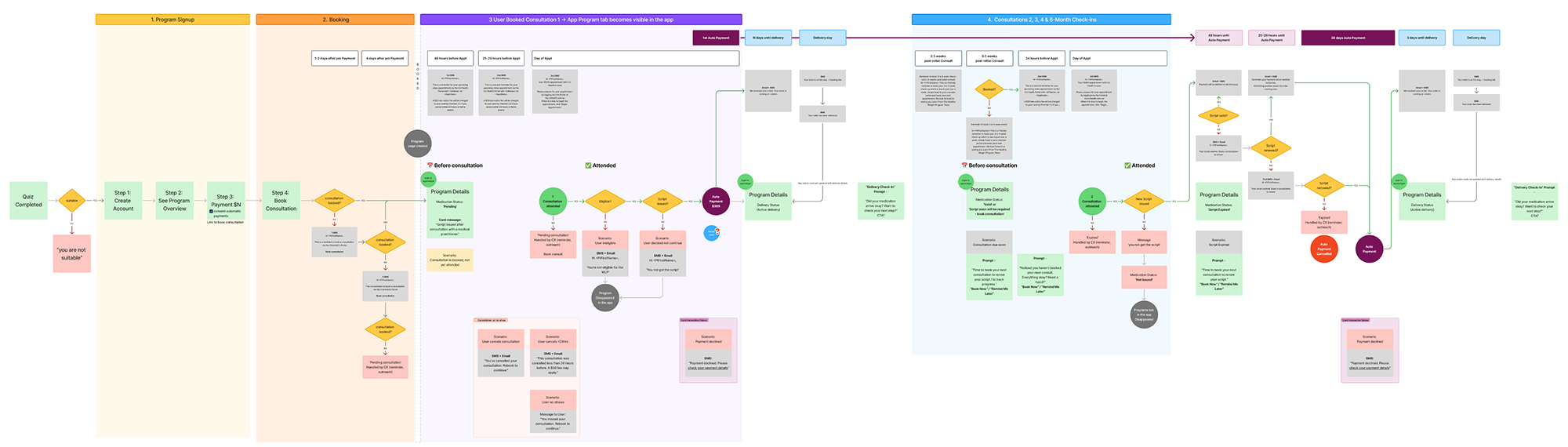
With My Scripts as the foundation, I designed the Programs Framework to configure to any health program rather than hardcode each one from scratch.
Getting pharmacy ops, engineering and customer support aligned on 30+ edge cases was as important as any screen I designed.
After the first pilot, modules became optional. That one change made the framework genuinely scalable.
Programs Needed Their Own Tab
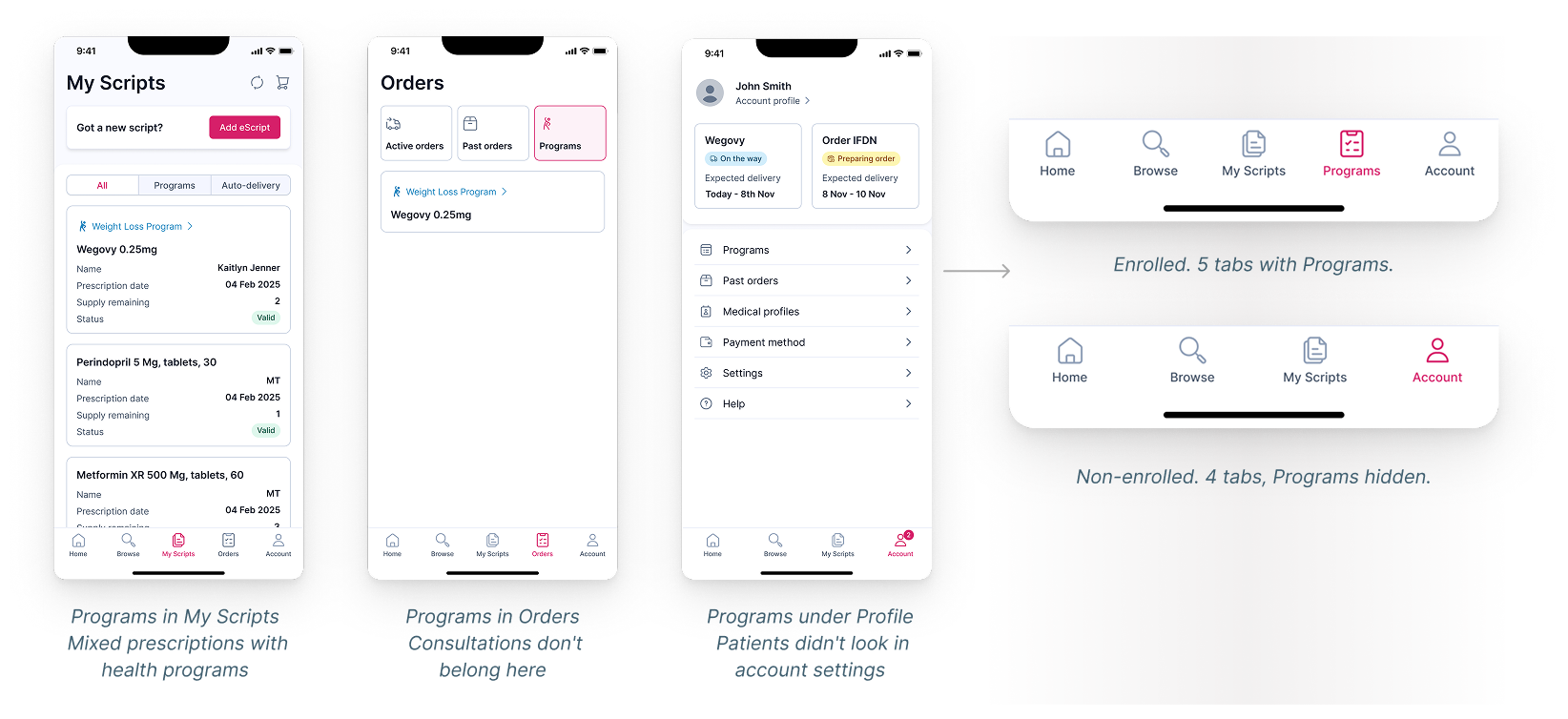
The constraint
Regulation prohibited promoting programs to non-enrolled users.
The solution
A dynamic Programs tab. The tab appears the moment a user enrols.
Progress Tracking That Feels Supportive, Not Clinical
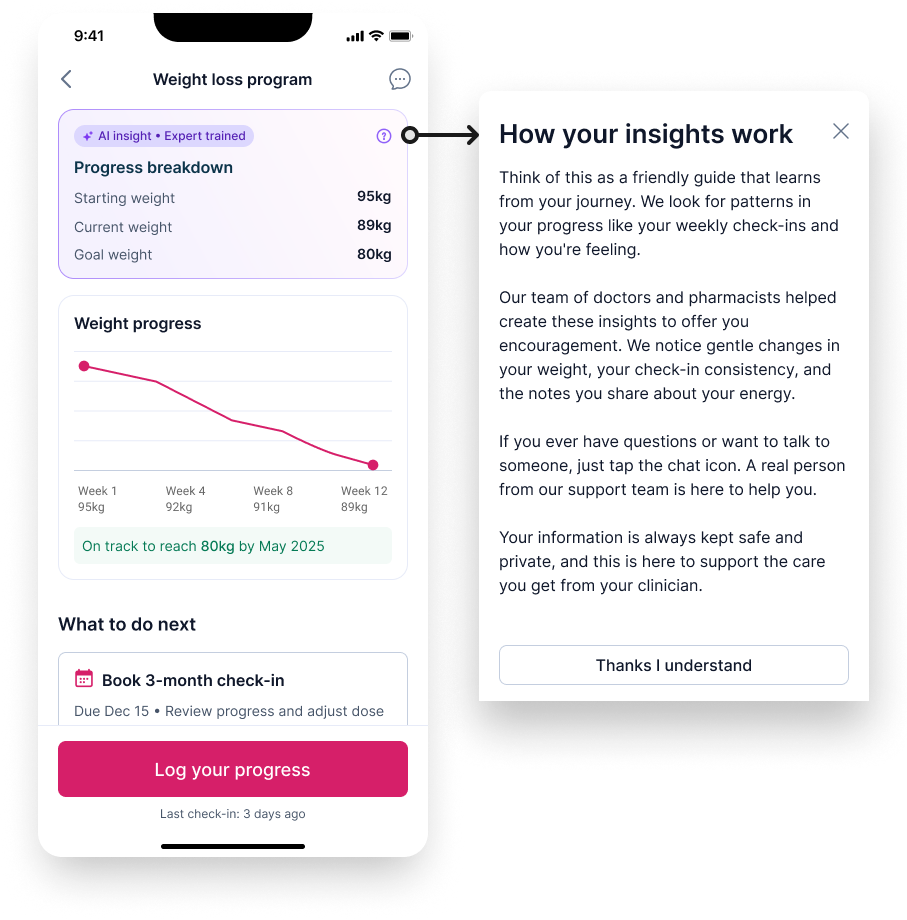
From the Programs Framework, the next question was how to make those programs valuable over time. The AI tracking feature delivers weekly insights that help patients see their progress and clinicians spot what needs attention. 45% of patients logged progress weekly. More importantly, patients reported a greater sense of control over their treatment.
AI That Acts Before Patients Ask
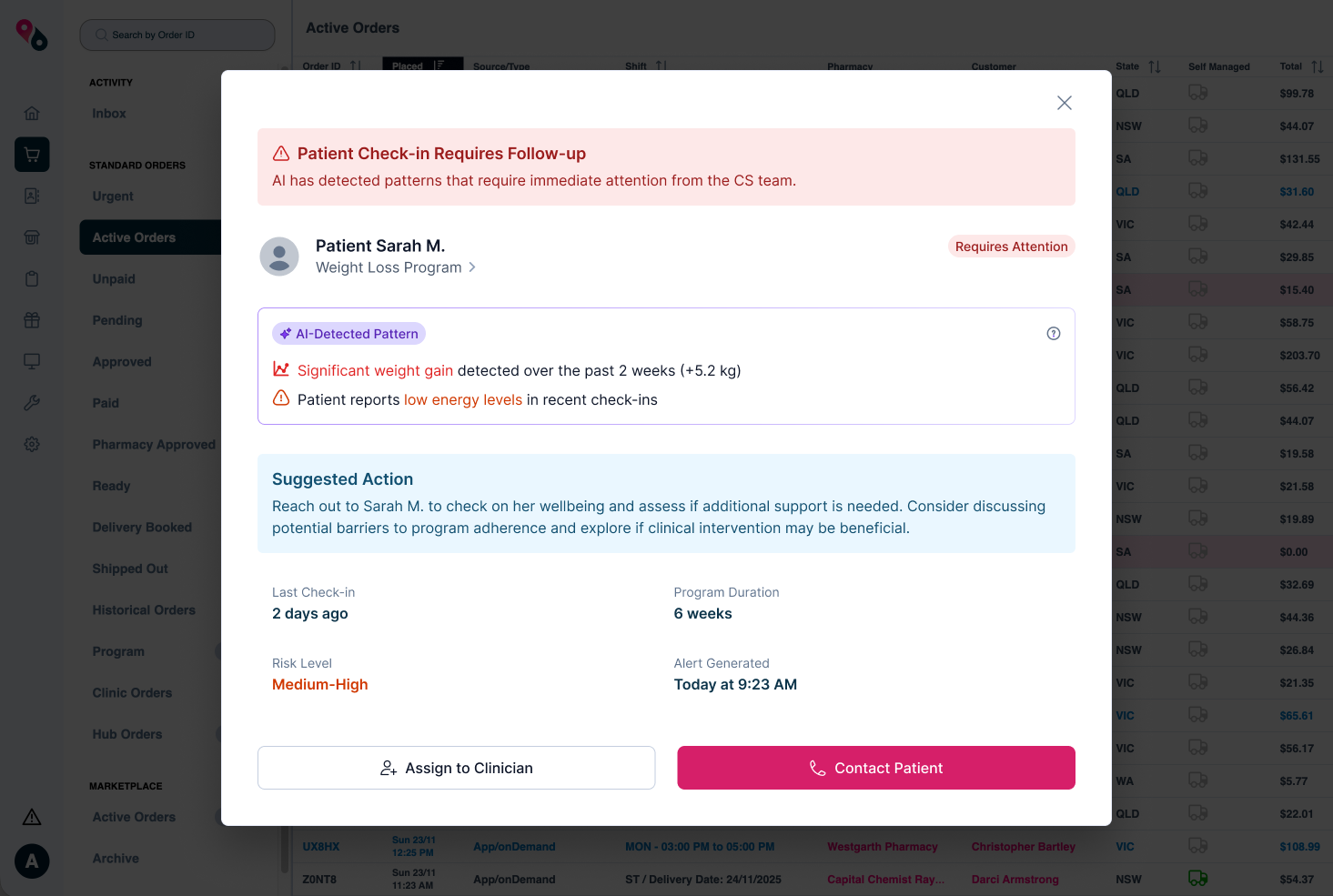
The same AI layer worked behind the scenes for the support team. When patterns in a patient's check-ins suggested they needed help, the system flagged it before the patient raised a concern themselves.
- Traceable alerts. Each flag maps to a specific check-in answer, whether that's weight, mood, or side effects. Nothing inferred from invisible inputs.
- Calibrated confidence. Three check-ins showing the same pattern is treated differently from a one-off blip. The team acts on calibrated information.
- Triage-ready format. One headline, three bullets. A clinician decides whether to act in 5 seconds.
- Risk-adapted actions. High-risk alerts surface Assign to Clinician first. Lower-risk alerts surface Contact Patient.
The technology became a bridge to human connection, not a replacement for it. The AI told the support team which patients needed attention first, and gave them the context to act.
Impact and Reflection
scripts uploaded in first month
to launch new programs (vs 3 months)
of patients logging progress weekly
This wasn't three separate projects. It was one connected system where each piece enabled the next. My Scripts gave medications a home. The Programs Framework made that home scalable. Progress tracking made programs valuable.
The hardest part wasn't designing screens. It was convincing stakeholders to invest in frameworks when they wanted features fast.
What I'd change
The Programs Framework v1 forced every program to use all modules. After the WLP pilot showed not every program needs every module, I made them optional and learned to design configurable systems as optional from the start. The refactor cost us two weeks I wish we'd saved.
"Anna brought a rare mix of vision, craft, and collaboration to our team. A designer who thinks strategically and gets things done well. Made complex problems feel manageable. More than her sharp strategic mind, it was her openness and team-first attitude that made working together such a pleasure. She knew when to push back with data, when to move fast, and when to take time to build things right. Easy to work with, genuinely collaborative, and someone you want in the room when important decisions are happening. Highly recommend."

Tim Van Brugge
Co-founder & CTO
Chemist2U Australia